01 — Collection
Collection
Conversations, documents and decisions flow into a connected knowledge base — on your machines, not in someone else’s cloud.
Approach
No leap of faith and no multi-month projects without results. A 14-day pilot shows value on your real documents — and everything after it builds only what was proved.
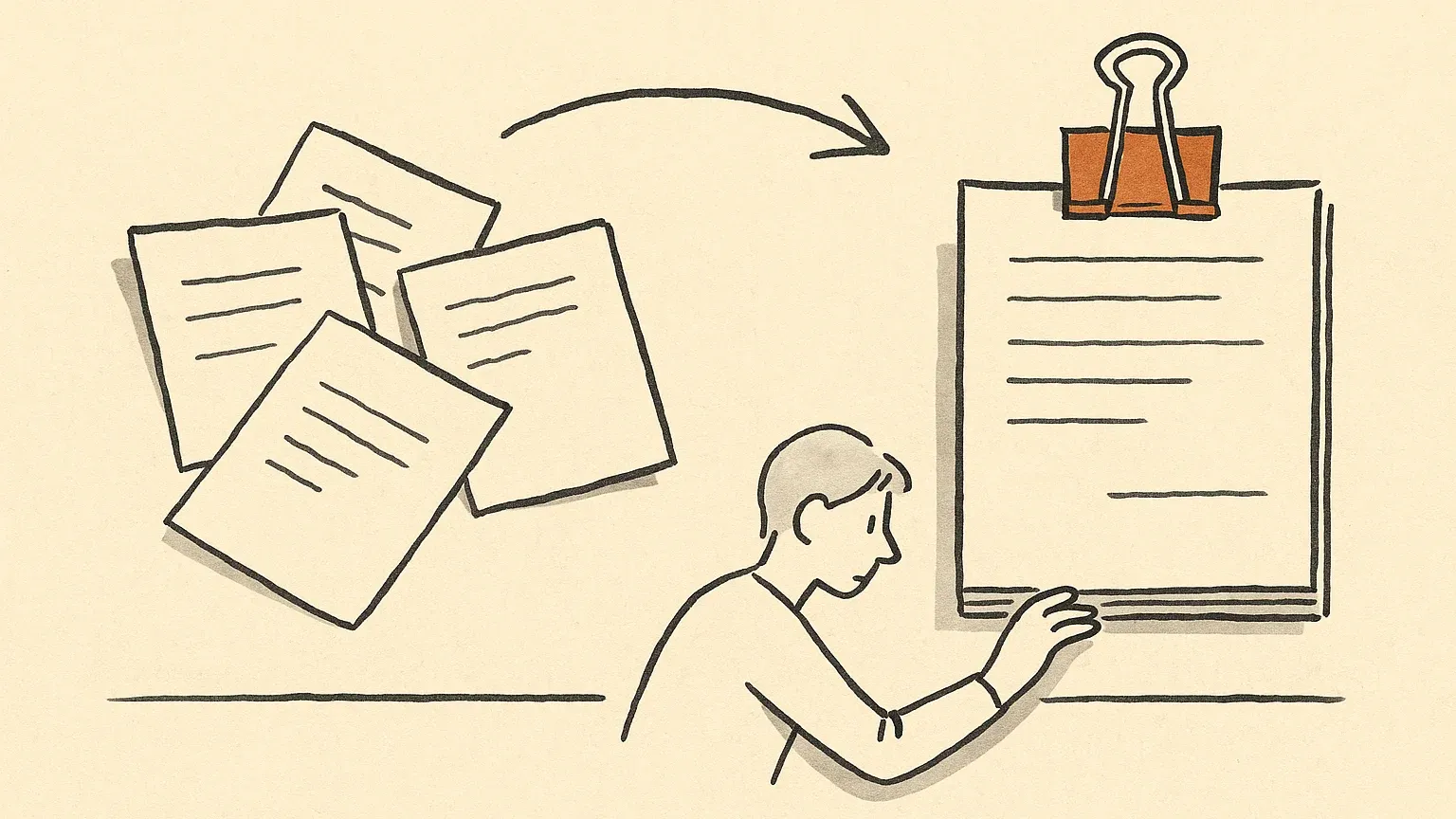
Inside the pilot
What actually happens from day one to the report — and how much of your time it really takes.
We capture where knowledge lives today, where it leaks and where hours are lost — before we build anything.
We build and run chosen automations on your real documents — locally, with approval for every write.
We measure what changed and hand over a rollout plan, step by step.
The pilot engages one team, and only in a limited way. If it does not show measurable value on your documents — we do not charge for it.
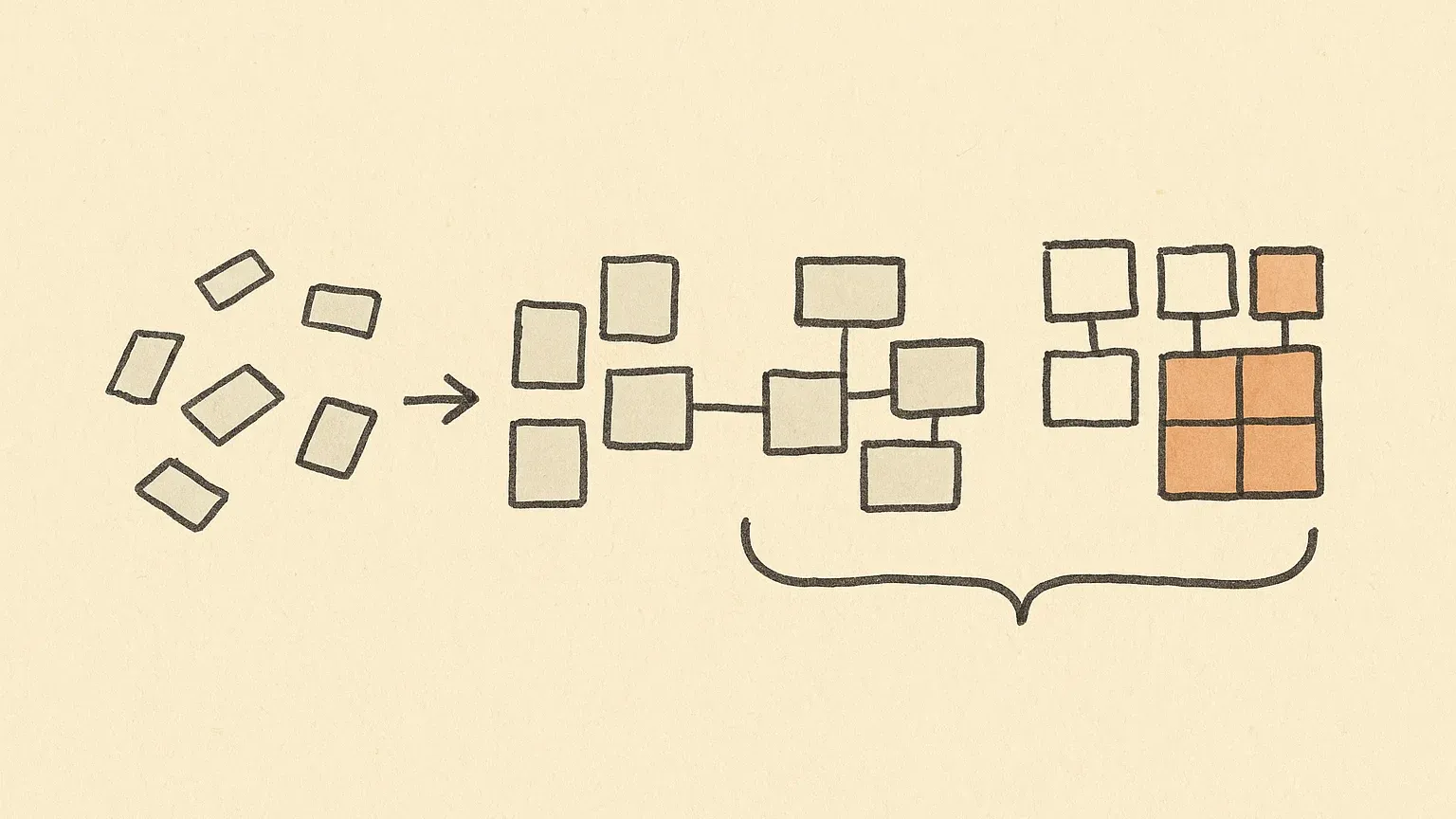
Under the hood
Scattered information does not become useful on its own. The system guides it through five steps — from collection to an answer with a source — with human approval before every write.
01 — Collection
Conversations, documents and decisions flow into a connected knowledge base — on your machines, not in someone else’s cloud.
02 — Cleaning
Duplicates are resolved, personal data sidelined, and everything gets consistent labels.
03 — Linking
Related notes, projects and people are connected, so knowledge becomes searchable as a whole — not folder by folder.
04 — Answer
A question gets an answer with a source, in seconds. Drafts and reports appear overnight — nothing is written without review.
05 — Maintenance
Quarterly cleanup removes what is stale, so the graph gets denser, not messier.
Where data live
Company knowledge is split into two layers — private, which never leaves your machines, and shared, which the team and system draw from. AI comes to the data; data do not travel to AI.
The biggest gain is where contracts, finances and client data live — that is why the system is built to be allowed to work there.
The system writes only to quarantine. No automatic writes. No source — no note.

Independence
AI models change month to month. The system is built so that costs you nothing.
Process questions
Before we start we agree what is measured — usually time to answer and hours of manual work on chosen tasks. At the end of the pilot you get a before/after comparison on those metrics, on your documents, not someone else’s examples.
The system is maintained from real practice: when a procedure changes, the record updates, and quarterly cleanup removes what is stale. That is why maintenance exists as a phase — a system without a gardener decays.
For the pilot: one person who knows where knowledge lives and the team whose documents we use. For long-term work we train 1–2 internal champions who keep the system alive — hours per week, not days.
No. Setup fits around your schedule and the team keeps doing their job. The first change people feel is a finished draft waiting in the morning — not a new programme they must learn.
30 minutes of conversation, no sales pressure. We walk through your case: where knowledge leaks, what the pilot would fix first and what it would look like for you.
Book 30 minutesWe reply within 24 hours