2026-07-06
The gap in the knowledge market
Over 10,000 organizations run on Obsidian, yet almost nobody will install and operate it for a team. That gap is the whole opportunity.
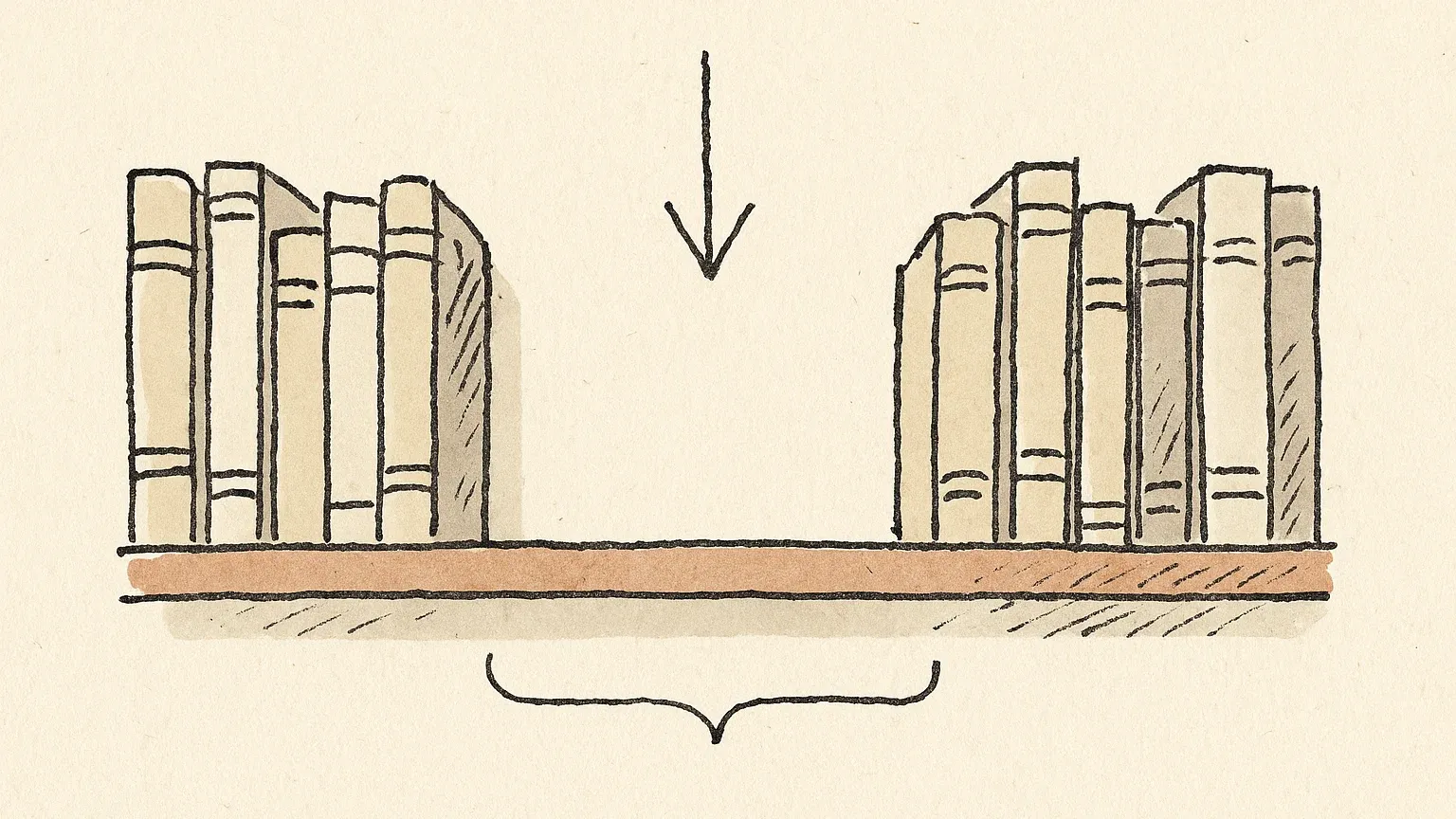
There is a strange hole in the market for company knowledge systems. At one end, course creators sell you a template and a set of videos. At the other, the large consultancies sell six-figure transformation programs. In between — for a company of 10 to 200 people that just wants the system built and running — there is almost nobody.
Two ends, no middle
At the low end, the second-brain economy is thriving. You can buy a course and a template for a few hundred euros and learn to organize yourself. Valuable, but it is education: you still have to do the work, and a team of thirty cannot be onboarded through a video course.
At the high end, the Big-4 consultancies run genuine knowledge and AI transformations — starting somewhere around a quarter of a million euros. That math only works for the Fortune 500. A thirty-person agency is not going to write that cheque, and the consultancy would not take the engagement anyway.
Between the two sit individual coaches offering hourly calls. Useful for an afternoon, but there is no delivery, no migration, no maintenance — you get advice, then you are on your own.
The tool is already trusted
This gap is not because the tools are unproven. More than 10,000 organizations already hold Obsidian commercial licenses — including teams inside some of the largest companies in the world. The local-first, plain-text approach is validated at scale. What is missing is the layer that turns a powerful tool into a running system for a specific team: architecture, migration, training, automation, and someone to keep it healthy.
The role that does not exist yet
Fifteen years ago, when every company adopted a CRM, an entire profession of systems integrators grew up to install and run it. Knowledge management is at that moment now, and the integrator role is empty — especially in Europe, where data sovereignty makes local-first a feature rather than a compromise.
That is the gap we fill. Not a course, not an hourly call, not a €250,000 program. We design the system, migrate the mess, wire in the automation, train the team, and stay to maintain it — and you own the data the whole way through.