2026-10-31
AI that gets stuck on one task
Three quarters of small companies that already use AI use it for one isolated task, and the savings you are looking for sit one step further down the process.
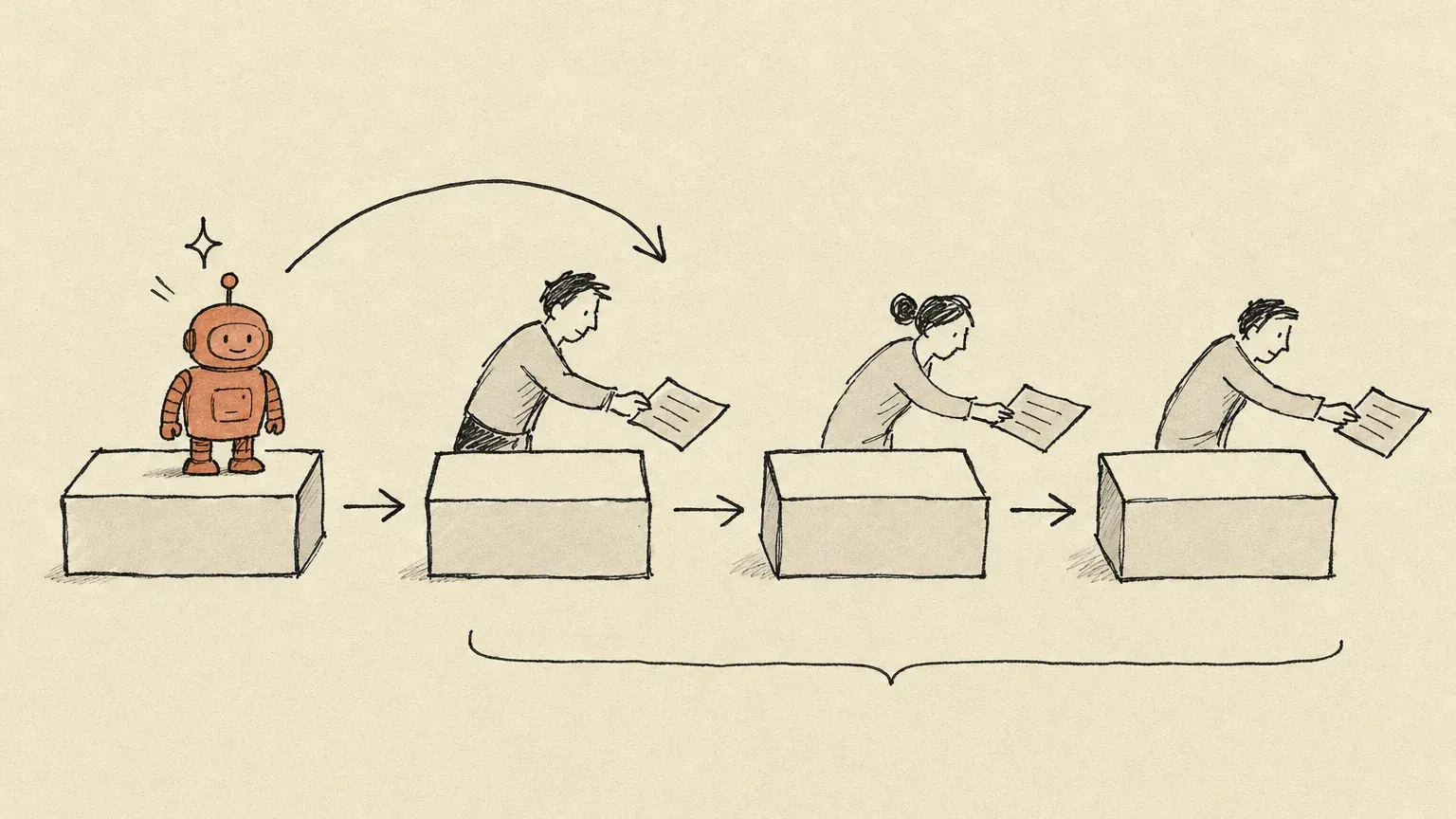
Someone in your company already uses AI. Probably for email, meeting notes or translating a quote. It works, nobody minds, and at month end it moves none of the numbers you watch.
That is not your fault. It is the most common state in Europe.
What the data shows
In spring 2026 the OECD published a survey of more than 2,000 small and medium-sized enterprises in 12 countries (Empowering SMEs in the age of AI, D4SME 2025). 61% use at least one AI tool. Of those, 76% are “AI novices”: off-the-shelf tools for isolated tasks. Only 19% use AI across several functions, and only 21% of all respondents report a significant or transformational effect. The sample is not representative, as the OECD itself says, but the ratio is clear: most have AI, few have a result.
Why it stops at one task
Because one task is the only one that needs no access. AI writes an email without access to your software, a password, IT, or anyone asking “may this leave the company?” Every next step raises that question. So it stays at the first.
What it costs you
The task that got faster was never expensive. The handover between two steps is. A document arrives, someone retypes it into the system, someone else checks it, a third answers the same customer question as last week. That is where the hours go, and where AI has not been yet.
What to do this week
Move the AI you already have one step down the process. Not “write a reply”, but, for example, “read this incoming document, fill in these six fields, I approve”.
- Pick one weekly task done by a paid person.
- Write it on one page: what comes in, the steps in order, what done looks like, what happens when the input is wrong. If you cannot, there is nothing to automate yet. That is a finding, not a failure.
- AI prepares, a person approves. Nothing leaves the company unsigned.
A prototype for one task stands within a week. What does not come by itself: it running every day, and someone owning it when the input format changes. That is the work we do, if you want it. The first step you can take yourself.
The arithmetic
Use your own numbers. This is a worked example, not a promise.
- One person, 1 hour a day retyping and checking = 5 hours a week.
- 5 hours × 46 working weeks = 230 hours a year.
- Labour cost: €34.9 per hour, EU average 2025, enterprises with 10+ employees (Eurostat, Hourly labour costs, 31 March 2026).
- 230 h × €34.9 = €8,027 a year for one person and one task.
Only a pilot on your own documents tells you how much of that you get back. This sum already tells you what you pay now.